
Globalno: Krumpirova cistolikost nematoda opada samo 10-30% godišnje bez domaćina, što usporava rotaciju
Ključni postupci
- 10-30% yearly decline of G. pallida without a potato host
- 46-100 fold G. pallida multiplication on susceptible crops
- 8 years is the minimum rotation recommended by AHDB guide
- 48% of potato land in England and Wales infested in 2019
Zašto je važno
- Za poljoprivrednike
- Test soil for PCN species before every potato crop; on G. pallida land, combine an 8-year rotation with resistant or tolerant varieties.
- Za dobavljače
- Develop and promote varieties with strong G. pallida resistance; current genes GpaIVsadg and Gpa5 give only partial protection.
- Za investitore
- Include PCN soil status in due diligence for farmland; cysts can remain viable for up to 40 years.
Sažetak od 60 sekundi
Potato cyst nematodes are a long-term land problem rather than a seasonal one. Without a susceptible crop, the pallida species shrinks by only 10 to 30% a year, and cysts can keep live juveniles for up to 40 years, so even eight years of rotation may leave around a sixth of the population in place. One susceptible crop can undo that work, because pallida numbers can rise 46 to 100 fold from a low start. In England and Wales almost half of potato land carries the pest, and UK losses are put at about £50 million a year. Resistance exists but is partial and pathotype specific, and nematicides mainly protect the current crop rather than clean the soil. Growers, land renters and breeders all have reasons to act: test soil, plan long rotations and back stronger pallida resistance. Caveat: infestation figures for Scotland differ strongly between the two guidance sources.
Potato cyst nematodes (PCN) are among the most persistent soil pests of potatoes. Two species matter: Globodera rostochiensis i Globodera pallida. Guidance from the British Society for Plant Pathology (BSPP) and AHDB shows why they are so hard to remove.
Slow decline, fast build-up
Without a susceptible host, populations fall slowly. BSPP estimates the annual decline at 20–40% for G. rostochiensis and 10–30% for G. pallida. The AHDB PCN grower guide gives typical rates of 30% and 20%. At a 20% annual decline, eight years without potatoes still leave about 17% of the population.
Each cyst is the dead body of a female. It can hold up to 600 viable eggs. Juveniles can stay viable inside the cyst for up to 40 years, BSPP says.
Radnim danima. Odjavite se jednim klikom.
Build-up is much faster. On susceptible varieties, G. pallida can multiply 46–100 fold from an initial population below 10 eggs per gram of soil, according to AHDB. The hatch also lasts longer in this species: about 18 weeks, against 12 weeks for G. rostochiensis.
How widespread it is
PCN is common in Britain. BSPP reports that infested potato land in England and Wales fell from 64% in 2002 to 48% in 2019. The AHDB guide found PCN in 50% of sampled fields there. Figures for Scotland differ by study: BSPP cites 41% of fields, while the AHDB guide reports an overall incidence of 18%.
The losses are large. BSPP estimates UK losses at about £50 million per year. Worldwide, PCN was estimated to cause a 9% loss of potato production. With susceptible varieties and high populations, losses can reach 80%. In AHDB trials at 10–20 eggs per gram, yield losses ranged from 1% to 35%.
Tools: rotation, resistance, nematicides
The AHDB guide recommends a rotation of at least eight years. Resistant varieties suppress reproduction, but do not prevent it fully. Resistance is pathotype-specific. G. rostochiensis has five pathotypes (Ro1–Ro5), and G. pallida has three (Pa1–Pa3). Two genes give partial resistance to G. pallida: GpaIVsadg and Gpa5.
Nematicides give only partial control. They can reduce yield loss, but often leave many eggs in the soil, AHDB bilješke.
Zašto je važno
G. pallida is the harder species. It declines more slowly, hatches over a longer period and has fewer resistant varieties. Growers need soil tests, long rotations and resistant or tolerant varieties together.
For breeders and seed companies, strong G. pallida resistance is a clear market need. For land renters, PCN status should be checked before signing a lease.
Prevencija i kontrola · Uvodna napomena
Krumpirove cistolike nematode (Globodera rostochiensis, G. pallida): what growers can do
- Prevencija: plant certified seed from tested land, keep long rotations, grow resistant varieties and clean soil from machinery.
- Praćenje: take soil samples before planting to measure cyst numbers.
- Kemijska zaštita: Nema učinkovite kemijske kontrole; samo prevencija.
- Upravljanje otporom: alternate varieties with different resistance to avoid selecting virulent populations.
Ovu napomenu pruža urednički tim potatoes.news samo u informativne svrhe. Ne predstavlja preporuku nijedne tvrtke i nije obvezna. Koristite samo sredstva za zaštitu bilja odobrena u vašoj zemlji i slijedite upute na etiketi. Nazivi proizvoda i registracije razlikuju se od zemlje do zemlje; posavjetujte se s lokalnim agronomom.
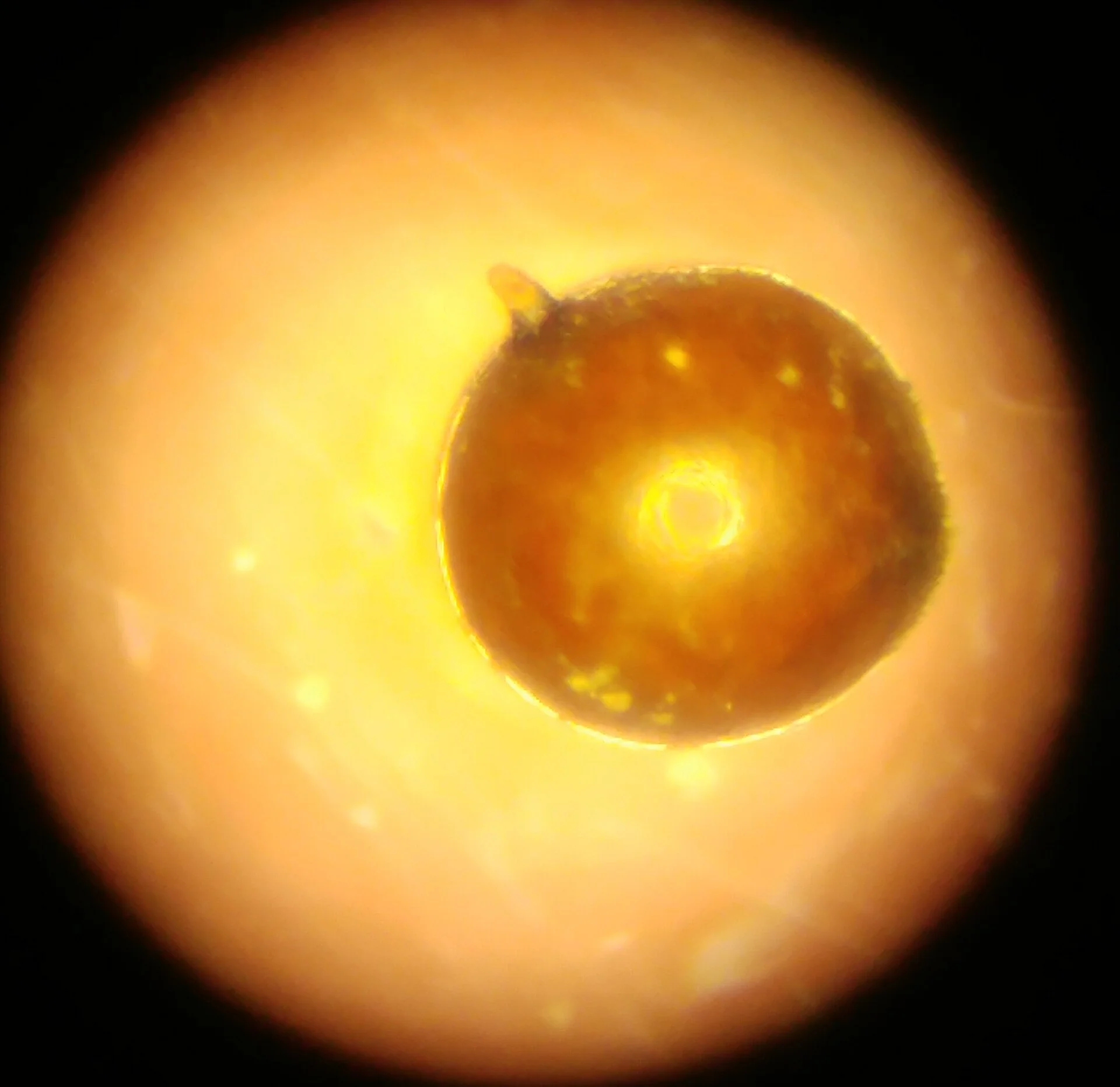
Photo: A cyst of the potato cyst nematode (Globodera) (illustrative). Christina Staudigl / Wikimedia Commons, CC BY-SA 4.0
Globalni sažetak o krumpiru
Pet najvažnijih vijesti, cijene, upozorenja o bolestima i događaji. Radnim danima ujutro, bez oglašavanja.
Izvori
- BSPP — Potato cyst nematodes (Plant Pathology fact sheet) — https://www.bspp.org.uk/wp-content/uploads/2022/11/PP6-Potato-cyst-nematodes.pdf
- AHDB — PCN grower guide (2018) — https://projectblue.blob.core.windows.net/media/Default/ImportedPublicationDocs/PCN-Guide659_181102_WEB.pdf
- AHDB — Potato cyst nematodes and their management — https://potatoes.ahdb.org.uk/knowledge-library/potato-cyst-nematodes-pcn-and-their-management-in-potatoes
Povezano u ovom materijalu
- Država
- Svijet
Povezane priče

Globalno: Što čini dobru sortu krumpira za čips, od 20-25% suhe tvari do niskog udjela šećera

Bjelorusija: Sedam novih sorti krumpira blizu državne registracije


